trapped in limbo - a review of Isola from Image Comics
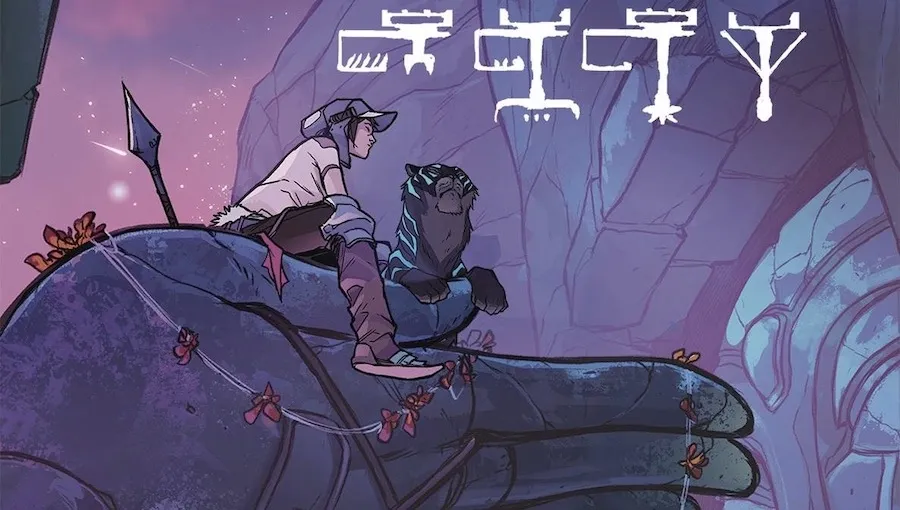
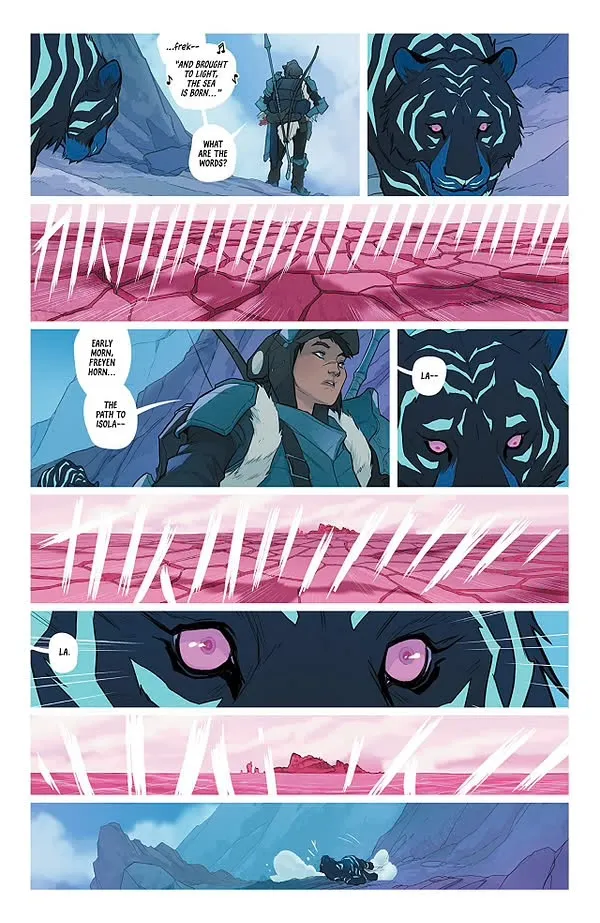
I picked up Volume One of Isola, flipped it open and knew immediately I had to have it. As we enter the world of Isola, by Karl Kerschl, Brandon Fletcher, Msassyk and Aditya Bidikar, we meet a Captain named Rook and a turquoise tiger Rook refers to as Your Majesty, on their way through wilderness to Isola, the land of the dead. When I began reading, it caught my partner's eye as well as he looked over to where it lay in my lap.
"Woah, that looks cool."
"It's beautiful, isn't it?"
(He eyes a panel where Rook and the tiger look at each other meaningfully.)
"... What's with the tiger?"
"I don't know yet, but there's definitely sexual tension between the tiger and this soldier."
"All right."
After Rook announces in the opening pages that she wishes to avoid danger, the plot moves the two of them quite swiftly into said dangers and more. By the end of the volume, we've travelled through several different biomes as well as a couple levels of existence, and encountered several languages (including one created for the series!) that promise a great diversity of culture and life-form. We've also learned some of the backstory of why Olwyn is a tiger. A lot is packed into Volume 1, but whereas the artwork and coloring seems universally praised, reviews frequently comment that the plot is confusing , with some folks explaining it as just "not spoon fed" and others calling it "basic".
This is because, as beautiful, as Isola is to read, it is also, unfortunately, quite confusing in its pacing and what it chooses to reveal to the reader. I moved through the story always understanding what characters were doing and easily accepting delayed exposition, but often feeling a sense of amnesia at how they got to where they were.
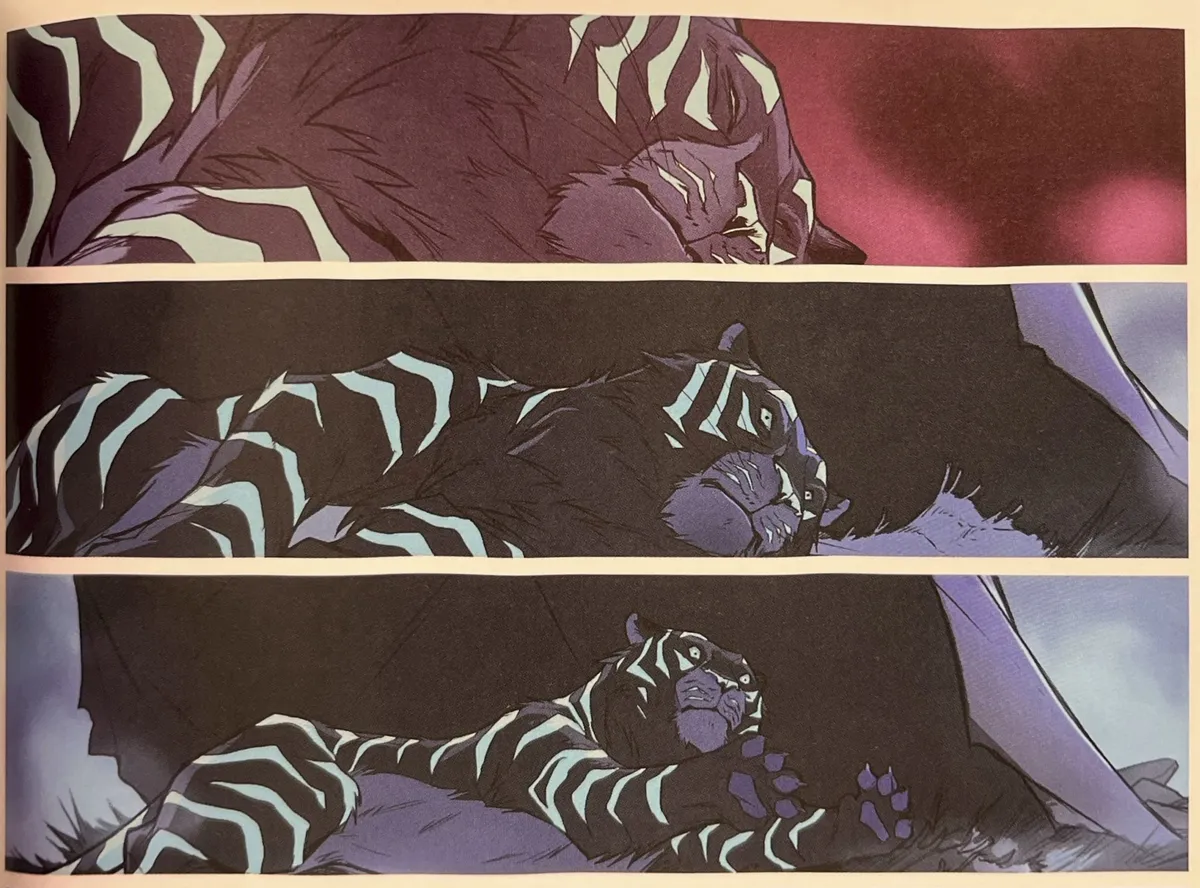
Some scenes unfold in luxuriously paced spreads. In peaceful establishing panels, I found myself admiring the volumes and angles within Rook's armor, and inspecting the shading of twilight on city ruins. In a quick flipthrough, the pages are full of a rainbow of lush palettes. Panels linger upon expressions, so the reader can follow Rook's quick assessment of the faces of bandits, betrayers, her silent and often reproachful Queen, and shy tentative allies. Yet sometimes Rook's silence backfires, as she problem-solves on her own and leaves us behind to try and catch up. She leaves us in the company of Pring, who is the only "explainer" character who shares his thoughts with us. This is unfortunate because Pring is annoying. Cast in the mold of the Magical Monk, he speaks with broken grammar, always in third person, and is either speaking in poetic riddles, or telling Rook to chill out, and then immediately shouting at her to get up and fight. In my mind his persona is regrettably linked with Jar Jar Binks.
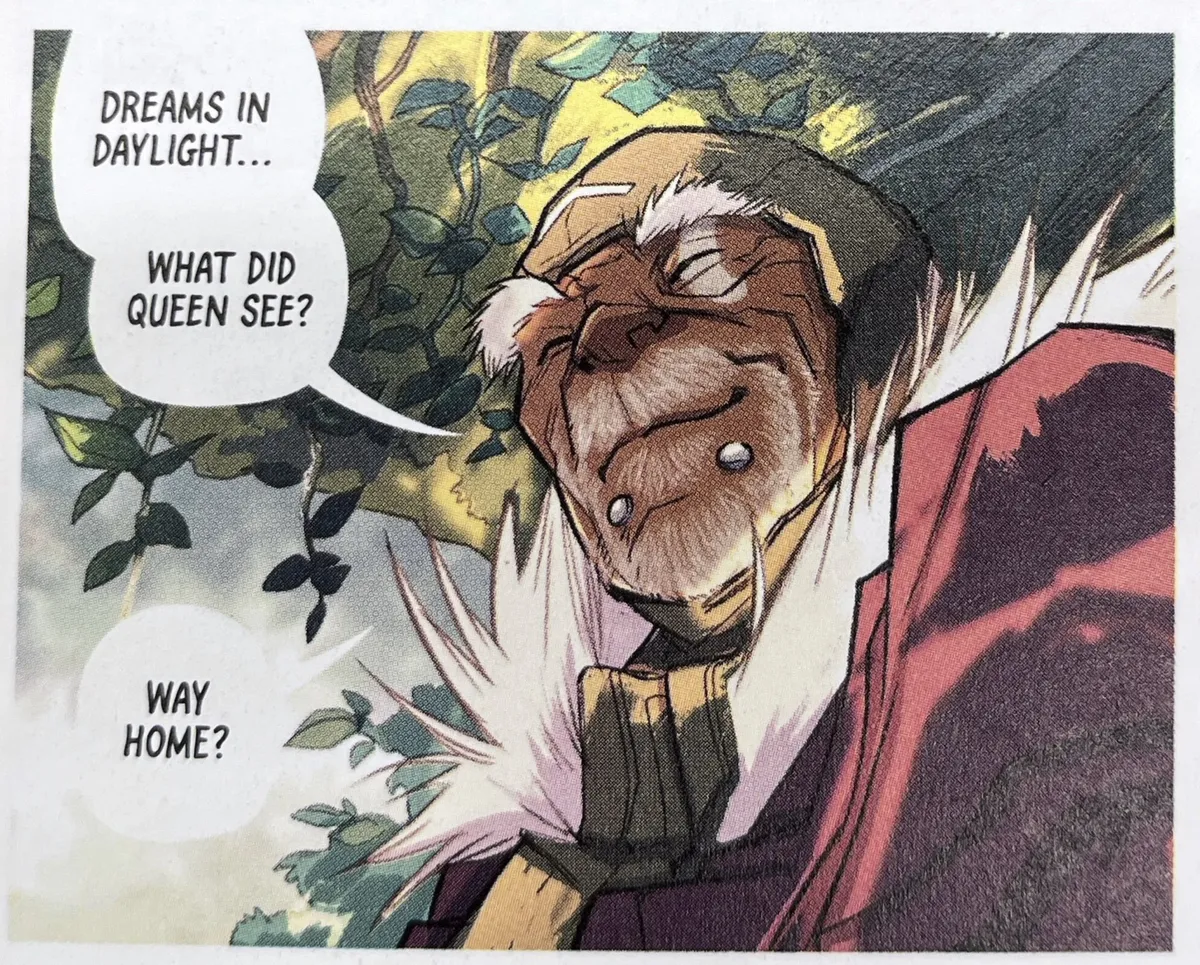
Whereas plenty of space is made for world-building and scenery, time seems to speed up when important motives or mechanisms are being revealed. For example, Rook receives a book in a city setting and we watch her receive it with surprise and awe. The silence of the scene makes it mysterious and pensive, something to be shelved for later. However, later, in the middle of a swamp, Rook is suddenly reading a weird riddle out of the resurfaced book and I realized I had completely missed her sudden realization that the book leads to a tribe for which she is searching. It was crammed into a small inner panel right next to the gutter a page before. The beautiful mystery turned into a rushed Get Out Of Jail card, because we are locked out of the hero's thoughts. Although some readers like being trusted with some mystery, the cracks in our understanding are strained to the breaking point especially in the last third of the volume, when a healing fountain reminiscent of the Tree of Souls from James Cameron's Avatar comes out of nowhere and features sympathetic bunnies that we last saw during a drug trip.
In Isola, there are mysteries that are easy to solve, and mysteries that are interesting. On one hand, there are a lot of meaningful nods to Rook's past involvement with a community called "The Circle," a heavy dose of neologisms, the general question of why Olwyn is a tiger. All of this is easily handled and, other than the slang, adds to the sugary flutters of jumping into a new story. On the other hand are Pepto pink scenes of hallucination, the Moro's tantalizing religion, the fox. After eating the flesh of a hallowed megafauna, tiger Olwyn begins to have thrumming, hammering visions of the land of death. Just as we begin to understand that the Moro worship the transcendence of the human body into animal form and have some way of achieving this transformation, we are torn out of the scene and Rook and Olwyn are ejected from their territory. A fox plays illusory tricks on Rook and Olwyn and it isn't clear who can see it. (I am sure the creators would plan to explain the fox in a future issue, but in the meantime its presence isn't a demure little nod or cliffhanger - the impact it has in every appearance is so distracting and confusing that it is basically a chaos MacGuffin.)
I found these scenes tantalizing for their brief explorations of how reality in the world of Isola operates. Maybe the animals of Isola have a consciousness outside of human understanding, which the Moro recognize and which Olwyn can now access in her tiger form. It could be that the fox doesn't exist in the same physical or temporal realm as the rest of the story, and is a dream-walker or a time traveller. Perhaps the world Rook walks through has another layer that she is unaware of - perhaps Isola is not a destination but an overlay of the current world through which she and Olwyn are traveling. The mysteries dipping into visions, dreaming, and spirit, were both intriguing and frustrating, as it was unclear if they were just chips played for fantastical intrigue or if they had any greater significance as I hoped they might. By the end of Volume one, the story has returned to the general Get-The-Queen-To-Safety premise, but I wanted so much more of the surrealism and the hints that perhaps the world is more magical than just one tiger transformation, perhaps not all is what it seems. That was what made Isola most thought-provoking to me.
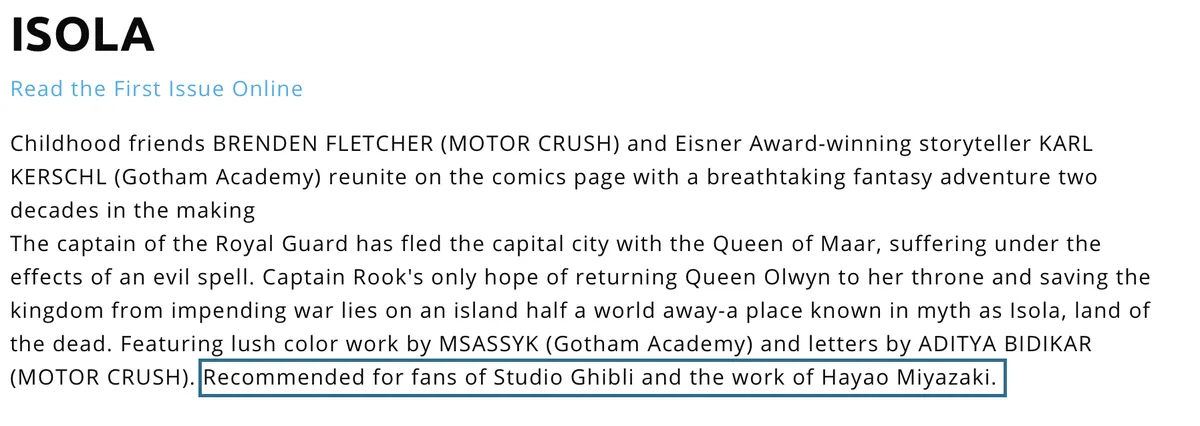
As of right now Isola is currently indefinitely on hiatus with two volumes and ten issues released.^[Someone posted a year ago that Brandon Fletcher, one of the creators, says the writing for Volume 3 is done] I wonder how much of this might have to do with the marketing of Isola. Image describes it as "Recommended for fans of Studio Ghibli and the work of Hayao Miyazaki" and Karl Kerschl says Nausicaa of the Valley of the Wind and Princess Mononoke are obvious influences. I can see some similarities in the framing and pacing of panels - scene-to-scene cuts that evoke the sensing of another presence or place from Princess Mononoke. The Hallum could be a megafauna contemporary of the Ohmu from Nausicaa, and some of the prophecy imagery in the opening credits could be similar to the flying creatures (Hallum?) on Isola's title spread. Still the comparison to Studio Ghibli and Miyazaki surprised me as, aside from the pastel colors and talking animals, I found neither the world nor the characters particularly Miyazaki-esque.
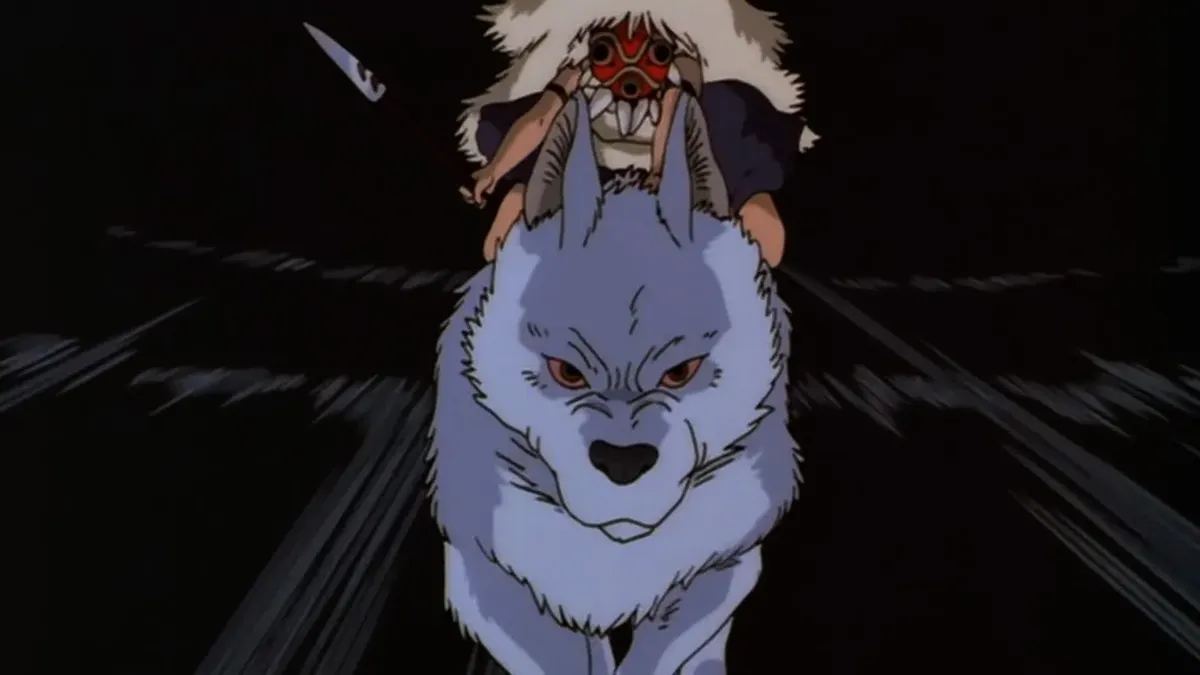
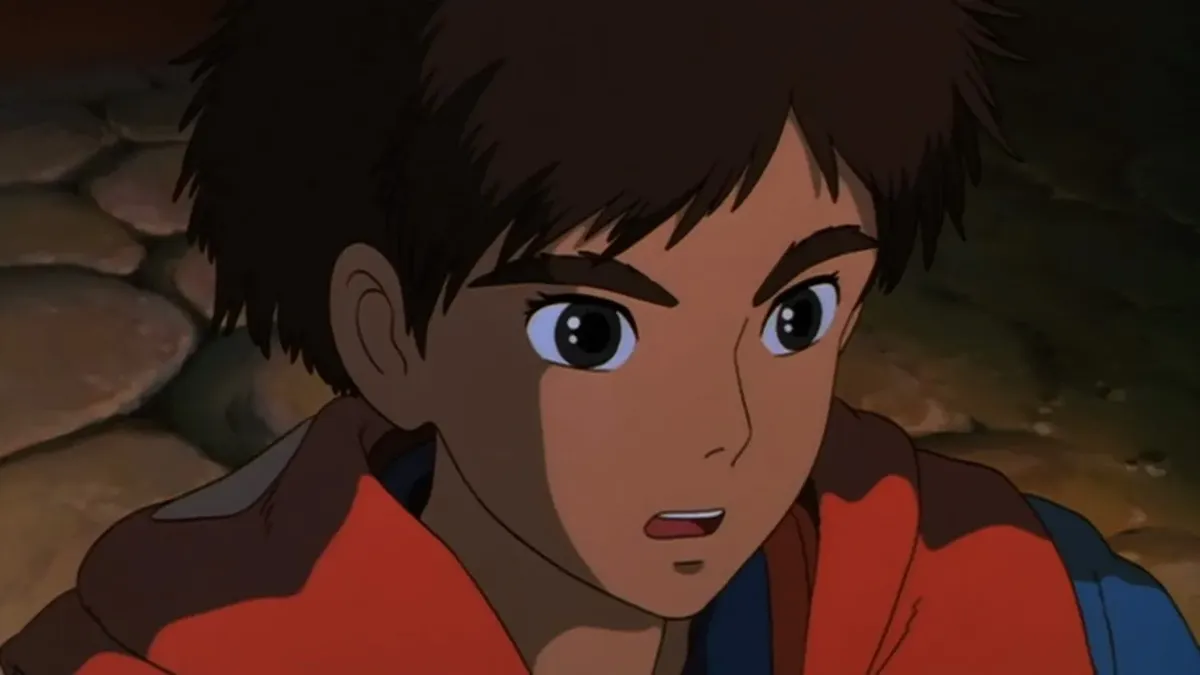
Miyazaki's heroes encounter the unknown and the supernatural frequently and approach them with composure, wonder and reverence. Part of the delight of watching Chihiro or Ashitaka navigate their journey is their grappling with others' expectations of them to be violent, or angry, or fearful. Audiences are swept up in their eloquent and bold appeal to the better consciences of the capricious and powerful, whether human or godly. In comparison, in Isola, the hallum and beasts feel removed from the human world, behind glass. Rook, as a clearly confident and capable soldier with no obvious personal shortcomings with which to reckon, is separate from nature; her relationship with the natural world only extends as far as it is a path to where she is going with Olwyn, whereas Rook's devotion to Olwyn is tangible from the first pages (as my partner so easily saw). We see how they dream about and fear for the other. Isola is most heartfelt as an us-against-the-world "bodyguard romance," and for it to be compared to the rubric of the Studio Ghibli oeuvre is for it to be graded unnecessarily and unfavorably.
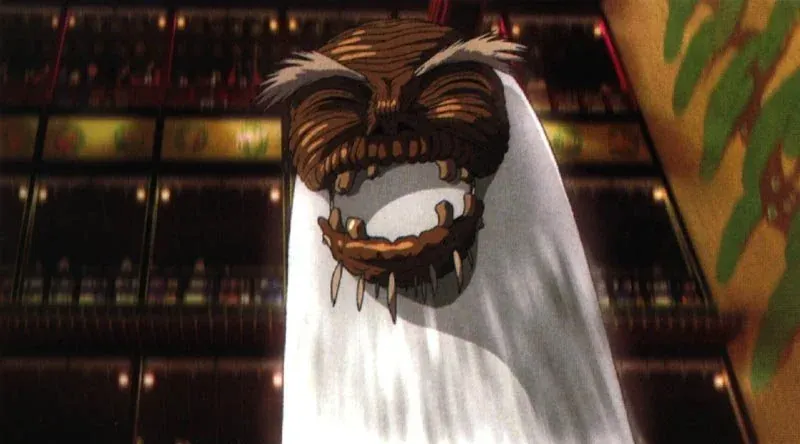
Isola is almost too rich with visual references, which tempt readers to bring in their previous connections with these familiar, comforting visual cues. Rook with her fur-lined armor, hime undercut, and dashing nose scar, struck me as a ligne claire descendant of Hyuga Hinata or Korra. Pring is strongly reminiscent of the old River God from Spirited Away. Some of the critters looked like cuter Pokemon evolutions of the Faun from Pan's Labyrinth. Already primed by marketing messaging, and with limited access to the inner thoughts of either protagonist as the story progresses, it is difficult to attach to any of the characters for who they have been shown to be in the work of Isola itself, rather than other characters they might resemble.
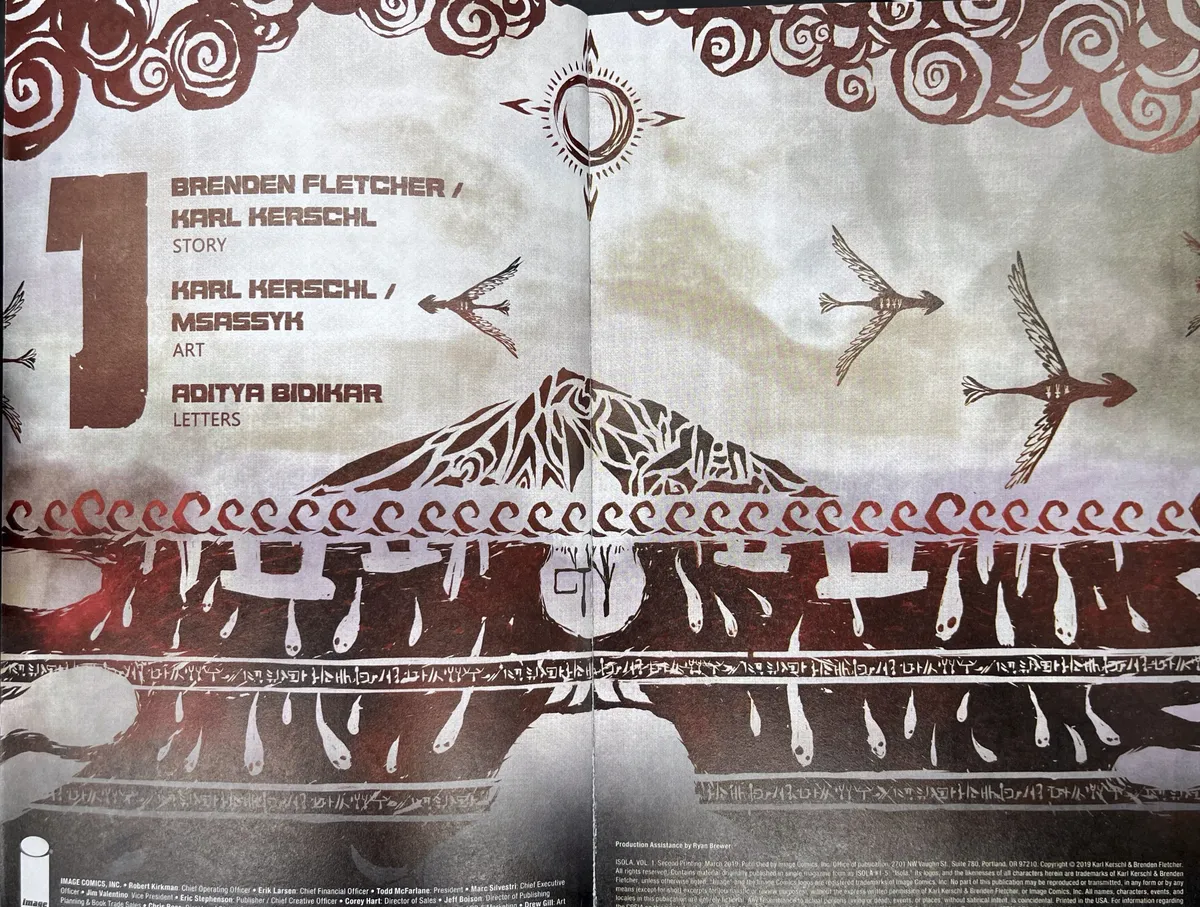
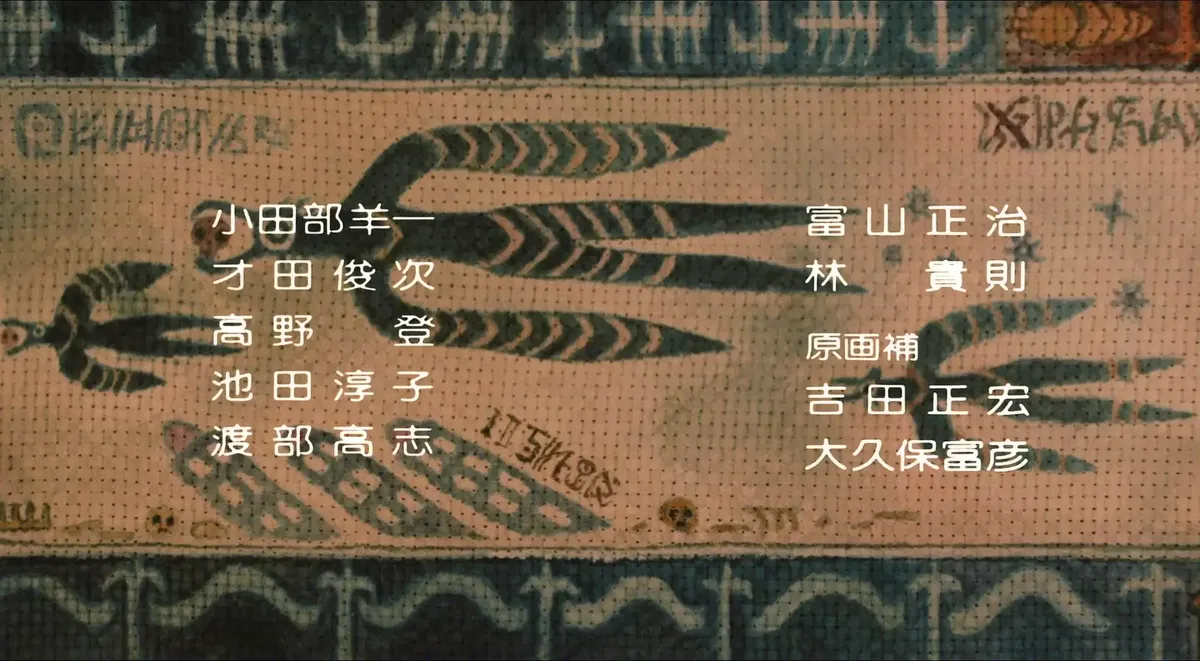
The beauty of Isola's artwork almost seems to work against itself (its marketing certainly does) inviting comparisons to other fantastical worlds that are ultimately, beneath shared colorful veneers, quite different in spirit in tone. If it could have committed more to the allure of mystery, perhaps Isola would be able to break its protagonists and readers alike out of limbo, where they are caught between fledgling narratives of exploration, romance, and mysticism. Although it takes the first curious steps to explore boundaries between realms - between man and beast, life and death, waking and dreaming, they are ultimately set aside too quickly.
Fun Fact
- The language of the Moro was created by Bidikar
Recommendation
If you liked Avatar the Last Airbender, or The Priory of the Orange Tree, you might like Isola.